Category: Weight Loss Surgery

The truth about appetite suppression after weight loss surgery

appetite suppression
Ready to get started with BMI?

Contact us to begin your weight loss journey!

woman eating a salad

The truth about appetite suppression after weight loss surgery

When you have weight loss surgery (also called bariatric surgery), you need to have all the facts. We want to clear up myths and misconceptions so that you know what to expect. One sometimes confusing issue that we often talk about with patients is appetite suppression. Understandably, people want to know what their appetite will be like after they have weight loss surgery. 

We will look at this more closely in this post, but the short answer is that it’s different for everyone. Many people have the idea that they will not be hungry at all. While this is true for some, it’s not true for everyone. You will likely still experience some hunger, but it will also probably be less than what you experienced before. Appetites are typically suppressed rather than eliminated completely. Here’s why. 

More about appetite suppression

According to the American Society for Metabolic and Bariatric Surgery, bariatric surgery increases the production of certain gut hormones that interact with the brain to reduce hunger, decrease appetite, and enhance satiety (feelings of fullness). Because of these factors, bariatric surgery typically helps produce long-term weight-loss.

When you experience rapid weight loss after surgery, your body goes through many hormonal and biochemical changes. Researchers also believe that the communication between the brain and the process of food digestion in the intestines is disrupted after weight loss surgery. 

Gastric sleeve & appetite suppression

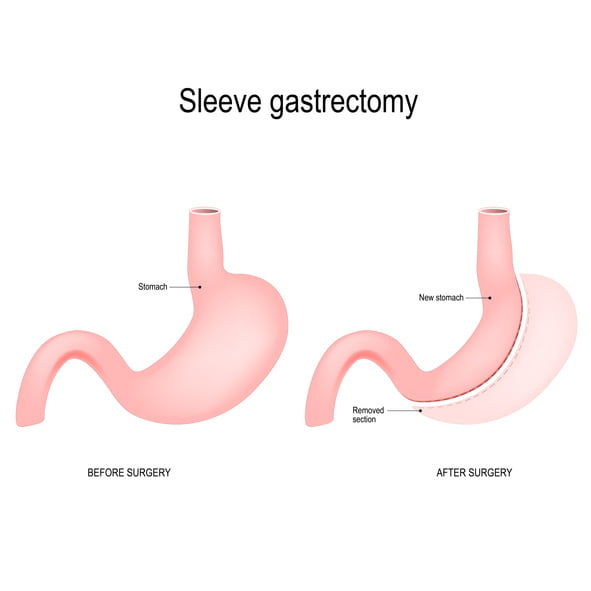
It’s also worth mentioning that the results of gastric sleeve surgery are a little different than with gastric bypass or the LAP-BAND. With gastric sleeve, we cut away and remove part of the stomach. This is where the fundus is located, and the fundus produces the hunger-causing hormone ghrelin. The removal of the fundus and ghrelin significantly reduces hunger sensation in many patients. 

Right after surgery, the combination of swollen tissues and the difference in the amount of ghrelin being produced does often pretty much eliminate hunger and cravings. However, this won’t be permanent. Tissues return to normal, and the reduced ghrelin becomes the new normal that your body adjusts to over time. Many lifestyle factors will also lead to feeling hungrier than you were immediately after surgery, but your appetite will likely still be suppressed. Your hunger levels will eventually fall in line with your new food consumption patterns.

Managing hunger after weight loss

There is a big difference between hunger and cravings. Learning to tell the difference between the two is a big step for long-term weight loss. Even after surgery, you may still experience cravings for trigger foods. For example, you are not hungry at all, but you still want to eat potato chips. This is a craving, not hunger. 

Managing cravings and hunger after weight-loss surgery is very important. We start preparing you for this before your surgery with our pre-surgery diet plans, and you will also have a post-surgery diet plan. 

With a plan, strong willpower, and motivation, managing hunger — whether suppressed or eliminated for a period of time — is possible. Here are some tips that help many of our patients be successful:

  • Eat nutrient-dense foods. Foods that are high in fat and sugar are very low in nutrition. They also provide very little long-term satiety. Nutrient-dense proteins offer large satisfaction in small portions. Focus on lean meats instead of processed ones, and choose whole grains and vegetables for every meal. 
  • Eat slowly. Many of us eat much faster than we should, and our bodies do not register fullness until it’s too late. Instead, eat slowly and chew thoroughly. Your body will be able to catch up and let you know when to stop eating. 
  • Drink water strategically. Drinking water 45 minutes before and after a meal can also help with hunger, especially because we often mistake thirst or hunger. 
  • Have small, frequent meals. This is often key for many of our patients. When you are actually eating more often throughout the day, it can help with hunger and cravings. You don’t feel deprived, and it keeps you feeling satisfied. Five smaller meals often work well, and be sure to never skip meals even if you do not feel hungry.  

While we help prepare you for diet changes before weight loss surgery, it is a big adjustment to manage post-op. Like anything else, you will get used to it. More importantly, your body will adjust. Many patients come to prefer their post-surgery diet plan. To talk more about what to expect regarding appetite and hunger after weight loss surgery, we would love to talk with you about your individual situation. Contact us today!

We will work with you every step along the way on your weight loss surgery eating plan

Birmingham Minimally Invasive Surgery is a caring group of professionals, including nutritionists and dieticians. Give us a call to set up a consultation at 205-833-6907

Interested in Birmingham Minimally Invasive?

Birmingham Minimally Invasive Surgery is a caring group of professionals who specialize in all types of bariatric surgery.  Our surgeon Dr. Jay Long has highly specialized training in bariatric surgery, having completed a fellowship in minimally invasive and bariatric surgery at The Methodist Hospital in Houston, Texas, where he focused on taking care of patients that are morbidly obese.  And we are so proud of our pricing that we publish the costs right on the front page of our website!  Insurance won’t pay?  We have a variety of financing options we can offer you so that you are able to get the healthy body you’ve wanted for years.

To get started fill out our form, or call today to set up a consultation. Our helpful team is ready to help you on your weight loss journey! 

Contact Us Today

Please fill out the form below to get started.

  • This field is for validation purposes and should be left unchanged.

Stories from our patients: reasons for weight loss surgery

weight loss surgery

weight loss surgeryWhen diet and exercise haven’t worked to help you lose weight, it might be time to consider weight loss surgery. This may be even more important if you have other serious health problems known as comorbidities, such as heart disease, diabetes, high blood pressure, sleep apnea, and more.

While this is the more technical explanation of why you might need to have weight loss surgery, we want to focus on some of the more unique and relatable reasons many of our patients made this life-changing decision. We see so many successes, and people are often happy to share their results. 

Read on for some compelling reasons why you might want to consider weight loss surgery based on experiences from our patients. 

Technical reasons for weight loss surgery

First, let’s get a little more technical information out of the way. The weight-loss surgeries we offer at Birmingham Minimally Invasive include gastric sleeve surgery, gastric bypass, and LAP-BAND. Collectively, these types of surgeries are known as bariatric surgery, and they involve making changes to your digestive system.

The overall reason for any bariatric surgery is to help you lose excess weight and reduce your risk of potentially life-threatening weight-related health problems.

Generally speaking, bariatric surgery could be an option if your body mass index (BMI) is 40 or higher (extreme obesity). It may also be an option if your BMI is 35 to 39.9 (obesity), and you have a serious weight-related health problem, such as type 2 diabetes, high blood pressure, or severe sleep apnea. 

Personal reasons for weight loss surgery

While these technical reasons are extremely important, and you will go through an extensive screening process with us to determine the best option for you, there is often more to the story. 

For example, one of our patients, Lisa, decided to get weight loss surgery for her health:

“I had gradual weight gain year after year, Type 2 diabetes, high cholesterol, high triglycerides, high blood pressure, obstructive sleep apnea, non-alcoholic fatty liver disease, unpredictable blood sugar, and I was passing out at work. My cardiologist told me that my number one priority was losing weight. He said I had literally taken years off of my life by not eating healthy and exercising.” Lisa had gastric bypass surgery. Her heaviest weight before meeting Dr. Long was 324, but one year after surgery, she weighed 150. Eventually her weight was 134.

Another patient of ours, Tami, decided to get bariatric surgery because she was missing out on her life: 

“Before surgery, I was miserable. I was unable to do certain things with my son. I had trouble breathing. I struggled to get off the sofa and out of bed. I even had trouble tying my shoes. I couldn’t fit on a roller coaster. I couldn’t cross my legs, and I was sweating all the time. I saw my entire family affected by weight-related health issues, high cholesterol, sleep apnea, diabetes, you name it; I could tell it was just a matter of time before the same thing happened to me.” Tami had gastric sleeve surgery and lost over 100 pounds.

Patti has gastric bypass because over the years she had a hard time losing weight.

I was on so many diet plans and even tried diet pills. None of it helped. Nothing seemed to work for me. I would lose maybe 20 pounds, but then eventually gain it back and, after a while, I became frustrated with the whole process.” Four years after surgery, she was able to eat pretty much anything she wanted. She eats smaller portions, but she says she does everything Dr. Long suggests and has stayed successful. 

Natalie was uncomfortable with herself after gaining weight. 

“I stopped wanting to go out and it got to the point where all I did was go to work and come home. Once I realized I was over 200 pounds, I said, ‘Okay that’s it.’” Natalie had gastric sleeve surgery and was able to get back to a comfortable, healthy weight.

Doctor supervised diets didn’t work for Marco.

“ I just felt like all these diets were all wrong for my body makeup. Every diet I tried, it seemed like I would lose some weight, and then it would just pack right back on.” Marco had gastric sleeve surgery, and after surgery, he stuck to what Dr. Long and staff told him to do. He saw the weight come off!

Jessica started considering weight loss surgery because of her knees. 

“It had actually gotten to the point where I could barely walk anymore. My knee surgeon told me the only other thing that could be done was a knee replacement, but, unfortunately, insurance wouldn’t cover it because I was only 40 years old at the time. While my knee surgeon got me on a weight loss plan, I began doing some research of my own. That’s when I did a Google search and came across Dr. Long at Birmingham Minimally Invasive Surgery.” Jessica had gastric bypass and was able to return to wearing the same size clothes she wore in high school.

As you can see, success looks different for everyone. But the reasons for weight loss surgery look different too. Whatever your reasons are, they are valid, and we would love to discuss them with you 

Why choose BMI? Minimally invasive approach, award-winning surgeon & more

weight loss center alabama

weight loss center alabamaChoosing to have weight loss surgery is a very big decision. But there is quickly another decision you must make: where will you have your surgery done, and what doctor will you work with? 

While there are many wonderful doctors who can perform a variety of weight loss surgeries, the truth is that all weight loss centers are not created equal. 

We built Birmingham Minimally Invasive Surgery with the goal of providing efficient and effective surgical procedures to patients. We offer a state-of-the-art facility, a board-certified surgeon, and the latest surgical procedures at competitive prices.

Why minimally invasive?

The first thing to consider is whether or not a weight loss center provides minimally invasive options. Minimally invasive surgery replaces older surgical methods of creating large, open incisions. Instead, we insert small surgical instruments through tube-like devices called trocars. We then perform the procedure through these trocars with the guidance of video cameras.

As the patient, you benefit from minimally invasive surgery dramatically compared to traditional open surgery. Minimally invasive surgery offers less pain, reduced scarring, lower risks of infection, less blood loss, shorter hospital stays, quicker return to work, and less occurrence of post-operative incisional hernias. Many patients now demand and expect the least invasive approaches in meeting their surgical needs. 

Minimally invasive surgery is performed both on an inpatient (stay in the hospital) and outpatient (go home the same day) basis.

What else does your weight loss center offer?

We believe that education is very important all throughout your weight loss journey. Before weight loss surgery and after, there will be a lot for you to learn. Our website features pricing options for each weight loss surgery we offer, FAQs, an online BMI calculator, a blog where we dive more deeply into weight loss related topics, and more.

We do want to note that the information on our website is strictly for educational purposes only. We want to provide resources, but these should not be used for decisions regarding treatment. All such decisions must be made in consultation with your physician.

More about our surgeon, Dr. Long

Dr. Long is board-certified in general surgery and is an award-winning laparoscopic surgeon. His training includes a fellowship in minimally invasive and bariatric surgery at The Methodist Hospital in Houston, Texas. 

Dr. Long has been performing weight loss surgery since 2002 and has had outstanding results. Dr. Long opened his practice in July 2006, and he provides services at St. Vincent’s East, St. Vincent’s St. Clair, and Grandview Medical Center. Dr. Long is a member of the American College of Surgery Center of Excellence for Bariatric Surgery, and he is also certified in LAP-BAND TOTAL CARE.

As you can see, there are many factors involved in choosing a weight loss surgery center. We encourage you to be a champion of your weight loss, your overall health, and your surgical health so you are able to make the best decisions for your unique goals. We will work with you at every step along the way!

Contact us to learn more about Dr. Long and BMI Surgery

Dr. Jay Long is trained in minimally invasive and bariatric surgery. He has performed thousands of procedures using this technique, helping countless patients across the nation. Our practice, Birmingham Minimally Invasive Surgery, is a caring group of professionals who specialize in all types of bariatric surgery. Visit us today at http://www.bmisurgery.com/ or give us a call to set up a consultation at 205-833-6907. 


Gastric sleeve surgery cost: what’s included & what’s not

gastric sleeve cost

magnifying glass over a dollar sign
Gastric sleeve surgery is a minimally invasive procedure that can help you lose weight and keep it off. It is a very popular procedure at Birmingham Minimally Invasive for
many reasons. One big advantage is that we perform gastric sleeve laparoscopically, which means there is a shorter recovery time than with other bariatric surgeries, allowing you to resume your normal daily life sooner. 

There is another big advantage too, and that is the cost. Our price at BMI Surgery is $8,999. This is the best price you will find in our area because our goal is to make losing weight more attainable for you. Whether you choose to pursue private pay or insurance coverage, we will help you meet the requirements so you can lose weight and start feeling great.

Let’s look a little more closely at what’s involved in the cost of gastric sleeve — what you get, what you don’t get, and how people approach their payments.

Factors contributing to gastric sleeve costs

Bariatric surgery prices vary based on type, level of invasiveness, and where you choose to have your surgery done. Gastric sleeve surgery is considered one of the less invasive weight loss procedures. It requires less time to perform the surgery and a shorter hospital stay in most cases. This allows us to offer it at a lower price than some other weight-loss surgeries.

Gastric sleeve cost: what’s included & what’s not at BMI

Our $8,999 cash pricing includes:

  • Pre-operative testing with blood work and EKG, if necessary
  • Surgeon fee for the procedure
  • Anesthesiologist fee
  • Post-operative office visits for 90 days
  • Surgery center fee (Unfortunately, not all patients will be candidates for outpatient surgery. If the procedure has to be performed in the hospital, the total price will be $12,800, and this cost will cover a one-night stay in the hospital.)
  • Monthly support group meetings

Pricing does not include:

  • Pre-operative office visit, which is $195
  • Pre-operative nutrition evaluation/education and postoperative nutrition followup, which is $80 in total
  • Post-operative office visits at 6 months and yearly, which are $125 per visit

Paying for gastric sleeve surgery: insurance or out of pocket?

Obesity is officially recognized as a disease by the American Medical Association. The health risks associated with it are so high that many insurance plans cover most, if not all, of the costs for gastric sleeve surgery. However, there are instances in which coverage may be denied. 

When insurance does cover the surgery, there are typically very strict requirements to qualify even though the procedure is medically indicated. This often includes a lengthy physician-supervised diet that usually lasts about seven months. By paying out of pocket, you avoid all of these strict requirements that insurance companies create. You can start the journey towards a healthier life much more quickly. 

Making the right choice

At BMI Surgery, we know there are many factors that go into your decision to undergo a weight loss procedure like gastric sleeve surgery. Our goal is to provide the latest surgical procedures at a state-of-the-art facility and at the most competitive prices possible. By offering gastric sleeve surgery for just $8,999, we hope to help many patients lose weight and regain control of their life.

Contact Us to Learn More About Gastric Sleeve Surgery Costs

Birmingham Minimally Invasive Surgery is a caring group of professionals who specialize in all types of bariatric surgery, including gastric sleeve surgery. We are so proud of our pricing that we publish the costs right on the front page of our website! We work with our patients to make the process as simple as possible and determine the best payment options on a case-by-case basis. Give us a call to set up a consultation at 205-833-6907. 


What’s in a name? BMI explained

BMI


BMI

BMI

When you think about our practice, do you think of us as “Birmingham Minimally Invasive Surgery,” or do you call us “BMI”? Many people refer to us simply as BMI, and this is by design. 

While BMI is a shortened name for our practice, including the keywords “minimally invasive,” it also stands for “body mass index.” Body mass index (BMI) is a tool we use to help us make an initial assessment about whether or not a potential patient is a good candidate for weight loss surgery. You can even try an assessment yourself on our website where we have a BMI calculator available. 

So if we choose BMI — short for Birmingham Minimally Invasive and body mass index — as our name, you can bet that it’s important to us. Here’s a little more information about why.

More about body mass index

Body mass index is a measure of body fat based on height and weight that applies to adult men and women. We want to note that BMI is not a diagnostic tool. It is a starting point for us in looking at each person’s individual health. 

BMI basics:

  • A normal BMI is between 18.5 and 25
  • A person with a BMI between 25 and 30 is considered overweight
  • A person with a BMI over 30 is considered obese

In general, the higher your BMI, the higher your risk of developing a range of conditions linked with excess weight. This includes diabetes, arthritis, liver disease, several types of cancer, high blood pressure, high cholesterol, and sleep apnea.

According to the National Institutes of Health, obesity and being overweight combined are the second leading cause of preventable death in the United States. They estimate that approximately 300,000 deaths each year are due to obesity. 

Typically, the higher the BMI, the worse a patient feels and the more limited they are in having an active lifestyle. When BMI goes down, these factors tend to improve as well.

More about Birmingham Minimally Invasive 

When you have a procedure at Birmingham Minimally Invasive Surgery, our goal is to make your recovery as quick and painless as possible. We accomplish this by taking a laparoscopic approach. Rather than creating large incisions, our surgeon, Dr. Long, uses minimally invasive techniques that involve small tubes, a video camera, and small surgical instruments. 

Smaller entry points for the surgery make for a faster recovery and a much lower chance of infection. Using traditional “open” techniques, patients frequently see recovery times of six to eight weeks. With minimally invasive techniques, the patient can be back to work in four to seven days.

Minimally invasive benefits:

  • Less pain
  • Reduced scarring
  • Lower risk of infection
  • Less blood loss
  • Shorter hospital stays
  • Quicker return to work
  • Less occurrence of post-operative incisional hernias

When it comes to minimally invasive techniques, Dr. Long is the best. He is an award-winning laparoscopic surgeon specifically trained in this approach for bariatric surgery. He has performed thousands of procedures using this technique, helping countless patients across the nation. He performs minimally invasive surgery on an inpatient and outpatient basis. Dr. Long has been performing weight loss surgery since 2002 and has had outstanding results. 

If you are interested in working with Dr. Long to determine your BMI and then go from there to explore the options of gastric sleeve surgery, gastric bypass, LAP-BAND, and more, contact us today.

Contact Us

  • This field is for validation purposes and should be left unchanged.

Explaining the “sleeve” in gastric sleeve surgery

gastric sleeve surgery

gastric sleeve surgeryWhen many people hear “gastric sleeve surgery,” they get an idea in their head that we actually insert a sleeve-like structure into your stomach. However, this is a common misconception. With gastric sleeve surgery, also called sleeve gastrectomy, we don’t insert anything at all. 

The term “sleeve” is simply a description of what your stomach looks like after the procedure is complete. During sleeve surgery, we remove about 75% of the stomach. This leaves a narrow gastric “tube” or what looks like a sleeve. 

What happens during gastric sleeve surgery?

Gastric sleeve surgery is the most frequently performed bariatric procedure in the United States. You may be a candidate for this procedure if your body mass index (BMI) is greater than or equal to 40. You may also be a candidate if your BMI is between 30 and 40 and you also have other medical problems such as diabetes, sleep apnea, heart disease, or high blood pressure.

Gastric sleeve surgery may be an option for you if you are severely obese and have not been able to shed the excess weight through diet and exercise. The procedure, in coordination with lifestyle modifications, can help improve your overall health and quality of life.

We take a laparoscopic approach for gastric sleeve surgery. This means we make just five or six small incisions in the abdomen and perform the procedure using a video camera (laparoscope) and long instruments that we place through these small incisions. We remove around 75% of your stomach and leave a narrow, sleeve-shaped gastric tube. With this procedure, we do not remove or bypass your intestines. Gastric sleeve surgery takes one to two hours to complete.

Weight loss from gastric sleeve surgery & other benefits

Gastric sleeve surgery is a restrictive procedure. It greatly reduces the size of your stomach and limits the amount of food that you can eat at one time. It does not cause decreased absorption of nutrients or bypass your intestines. After eating a small amount of food, you will feel full very quickly and continue to feel full for several hours.

The procedure may also cause your appetite to decrease, and people often wonder how this happens.  In addition to reducing the size of your stomach, gastric sleeve may also reduce the amount of “hunger hormone” that your stomach produces. This can contribute to weight loss after the procedure as well.

Depending on your pre-operative weight, you can expect to lose between 40% to 70% of your excess body weight in the first year after gastric sleeve surgery.

Many obesity-related problems improve or resolve after the procedure. Diabetes, hypertension, obstructive sleep apnea, and abnormal cholesterol levels are improved or cured in more than 75% of patients undergoing gastric sleeve. 

Many patients are surprised to learn that gastric sleeve surgery is more affordable than they had imagined. We have payment options with and without insurance, but our $8,999 cash pricing cost is the best you will find in the area. To learn more, schedule your appointment with us today.

Contact Us to Learn More About Gastric Bypass Surgery

Birmingham Minimally Invasive Surgery in Birmingham, Alabama, is a caring group of professionals who specialize in all types of bariatric surgery. Our surgeon Dr. Jay Long has highly specialized training in bariatric surgery, having completed a fellowship in minimally invasive and bariatric surgery at The Methodist Hospital in Houston, Texas, where he focused on taking care of patients that are morbidly obese. And we are so proud of our pricing that we publish the costs right on the front page of our website! Insurance won’t pay? We have a variety of financing options we can offer you so that you are able to get the healthy body you’ve wanted for years. Visit us today at http://www.bmisurgery.com/ or give us a call to set up a consultation at 205-833-6907. 


Everything you ever wanted to know about the LAP-BAND

lap-band

lap-band
You’ve heard of the LAP-BAND, and you know it’s a weight loss surgery option. But do you really know what it’s all about and why you might want to choose this option if you are considering weight loss surgery?

This minimally invasive procedure is one of the most common weight loss surgery options. In fact, it is generally thought to be the least traumatic of all weight-loss surgeries. It does not require any cutting, stapling, or stomach rerouting. This means less post-operative pain, a shorter hospital stay, and reduced recovery time.

For many, it’s the perfect way to lose weight and improve health conditions without being too restricting. We want everyone to be able to lead a happy and healthy life after surgery. Let’s see how that’s possible with the LAP-BAND.

How the LAP-BAND works

The LAP-BAND is a hollow band made of special material. Working laparoscopically, we place the band around the upper part of the stomach where it meets the esophagus. This creates a very small pouch that empties into the larger remaining portion of the stomach. The band is connected to a port, which is located underneath the skin of the abdomen. 

With this port, we can inflate the band with a salt solution. It can be tightened or loosened over time to change the size of the passage by increasing or decreasing the amount of salt solution. This tightening or loosening determines how much restriction there is on what you eat. 

The LAP-BAND induces weight loss by reducing the capacity of the stomach, which restricts the amount of food that can be consumed.

Advantages of the LAP-BAND

If fewer risks and side effects are at the top of your list when choosing a weight loss surgery, you should know the LAP-BAND offers a variety of benefits when compared to other procedures. Here are some of the other major advantages of the LAP-BAND:

  • Lower mortality risk than other weight loss surgery procedures — Both total complications and mortality rate are extremely low for the LAP-BAND with a mortality rate of only 0.1%, according to Obesity News Today.
  • Low risk of nutritional deficiencies — Since we do not change your anatomy with the LAP-BAND, food and nutrients continue to be properly absorbed into the body.
  • Reduced risk of hair loss — Since this typically occurs as a result of a nutritional deficiency, hair loss can be more common with other weight loss procedures.
  • No “dumping syndrome” related to dietary intake restrictions — Dumping syndrome occurs when food passes too quickly to the lower intestine. But again, because we do not change your anatomy with the procedure, this is unlikely to occur.
  • Adjustable — We can adjust the band to better meet your needs and weight loss goals, if necessary. Some patients also like knowing that it is reversible, and we can restore the stomach to its original form and function.
  • Cost-effective — The LAP-BAND is on the lower end of the scale in terms of weight loss surgery cost. This is often especially appealing for those who will be paying out of pocket, rather than using insurance assistance for payment. See pricing on all of our options here

The average LAP-BAND patient loses 30 to 40% of their excess body weight within two years. It is an effective procedure that many people are happy with years down the road when combined with a healthy diet and regular exercise. 

Finding the weight loss surgery option that’s right for you takes careful consideration, and more importantly, the opinion of a professional surgeon who understands your lifestyle. By working with our experienced surgeon at Birmingham Minimally Invasive, we will determine if the LAP-BAND is your answer.

Contact Us to Learn More About Gastric Bypass Surgery

Birmingham Minimally Invasive Surgery is a caring group of professionals who specialize in all types of bariatric surgery.  Our surgeon Dr. Jay Long has highly specialized training in bariatric surgery, having completed a fellowship in minimally invasive and bariatric surgery at The Methodist Hospital in Houston, Texas, where he focused on taking care of patients that are morbidly obese.  And we are so proud of our pricing that we publish the costs right on the front page of our website!  Insurance won’t pay?  We have a variety of financing options we can offer you so that you are able to get the healthy body you’ve wanted for years.  Visit us today at http://www.bmisurgery.com/ or give us a call to set up a consultation at 205-833-6907. 

A look at the major differences between gastric sleeve, gastric bypass, and the LAP-BAND

weight loss surgery differences

weight loss surgery differences
Making the decision to have weight loss surgery is huge. But even when you are certain that this is what you need to do, it can be overwhelming to move forward. Our
surgeon and staff will be with you every step along the way, but we know that many patients like to be as informed as possible about their options. 

In this post, we will take a closer look at three of our most common procedures to discuss differences, advantages, disadvantages, and more. 

Differences between our three most popular weight loss surgery options

One thing we hear often is that patients want to have the least invasive surgery possible. As our name suggests — Birmingham Minimally Invasive Surgery — all of our options are indeed minimally invasive. Our three most common procedures are gastric sleeve, gastric bypass, and LAP-BAND. We perform each of these laparoscopically, which requires only four to six tiny incisions and less than two hours in the operating room.

Gastric Sleeve

During gastric sleeve surgery, we basically cut away the top and largest part of the stomach, which is called the fundus. About ⅔ of the stomach is removed. The removed section is where the hunger hormone, ghrelin, lives. If you’ve heard someone say they are never hungry after gastric sleeve surgery, it is because we have removed the hormone completely. Some people find this benefit more appealing than others. The combination of removing the hunger hormone and a large portion of the stomach typically leads to significant weight loss.

Who’s a good candidate for gastric sleeve? If using insurance to cover the procedure, you must have a minimum BMI of 35 to 40, along with various other health issues, such as diabetes, sleep apnea, or heart disease. If your BMI is higher than 40, these other health issues are not required. Gastric sleeve is a good option for anyone meeting these requirements without insurance coverage as well. Because the procedure has been shown to be acid inducing, anyone with severe acid reflux disease should probably avoid this option.

What are the benefits of gastric sleeve as opposed to other weight loss surgeries? Compared to other options, gastric sleeve is a simpler procedure. We do not reroute the intestines like we do during gastric bypass, and we do not put in a foreign body like we do with the LAP-BAND. It’s a quick procedure that involves cutting 2/3 of the stomach away, leaving a very small, banana-sized stomach.

Gastric Bypass

With gastric bypass (also called Roux-en-Y), we create a very small stomach pouch that restricts food intake. A Y-shaped section of the small intestine is attached to the pouch and allows food to bypass the lower stomach — the duodenum (the first segment of the small intestine) and the first portion of the jejunum (the second segment of the small intestine). This reduces the amount of food you can take in because your stomach holds only one to two ounces. This also decreases the absorption of food and nutrients, which aids in weight loss as well.

Who’s a good candidate for gastric bypass? Gastric bypass is often a better option for our heavier patients because most will lose up to 80% of their excess body weight as opposed to about 60% with gastric sleeve. This rapid weight loss can be very beneficial for those who have more severe health issues, such as sleep apnea, high blood pressure, and diabetes. It’s also a good option for anyone with severe acid reflux or poorly controlled diabetes since gastric bypass has proven to cure both. 

What are the advantages and disadvantages of gastric bypass? Some people like knowing that gastric bypass is technically considered reversible. However, this is something we always want to avoid, because reversal will cause you to gain the weight back. After surgery, you do have to take nutritional and vitamin supplements for life because of the malabsorption of food and nutrients.

We hear that people often have the impression that gastric bypass is more invasive than other options, but we take a minimally invasive approach. We typically make six incisions, and it’s done completely laparoscopically. It is a little more labor intensive because we do change your anatomy.  

The LAP-BAND

With this procedure, we place the LAP-BAND, a foreign body made of a special material, near the top of the stomach where it meets the esophagus. This creates a very small pouch that empties into the larger remaining portion of the stomach. The band is connected to a port, which is located underneath the skin of the abdomen. This is how we put fluid in the band, which allows us to make the band opening larger or smaller in size, giving patients more or less restriction.

Who’s a good candidate for the LAP-BAND? Many patients prefer the LAP-BAND because it is not permanent. We are not changing the anatomy of the stomach, and we can take the LAP-BAND out if the patient chooses to do so. It can be a good option for those paying out of pocket, because the cost is less than other options. It’s one of our more cost effective procedures.

What are the advantages and disadvantages of the LAP-BAND? With the LAP-BAND, weight loss may be somewhat slower than with other options. We have to find that “happy place” where the patient is able to get food down but also able to maintain smaller portion sizes. This is where band adjustments come into play.

Weight loss surgery with and without insurance

The role your insurance plays may be a big factor in which weight loss procedure is best for you. Many insurance companies have a BMI requirement for each surgery that you will need to meet in order to be a candidate. If you will be paying out of pocket, the cost of the procedure will likely play a major role in your decision. 

With all three of these weight loss procedures, the goal is for you to lose weight and become healthier, hopefully eliminating or reducing the severity of other health issues. But you must remember that no weight loss surgery option is a magic fix for permanent weight loss. While these procedures will certainly help, diet and exercise will still be important.

Contact Us to Learn More About Gastric Bypass Surgery

Birmingham Minimally Invasive Surgery is a caring group of professionals who specialize in all types of bariatric surgery.  Our surgeon Dr. Jay Long has highly specialized training in bariatric surgery, having completed a fellowship in minimally invasive and bariatric surgery at The Methodist Hospital in Houston, Texas, where he focused on taking care of patients that are morbidly obese.  And we are so proud of our pricing that we publish the costs right on the front page of our website!  Insurance won’t pay?  We have a variety of financing options we can offer you so that you are able to get the healthy body you’ve wanted for years.  Visit us today at http://www.bmisurgery.com/ or give us a call to set up a consultation at 205-833-6907. 

An in depth look at gastric sleeve surgery & alternatives

gastric sleeve surgery

gastric sleeve surgeryDid you know that sleeve gastrectomy, also known as gastric sleeve surgery, is the most frequently performed bariatric procedure in the U.S.? It’s an option many of our patients at Birmingham Minimally Invasive Surgery choose as well. 

To qualify for weight loss surgery, your body mass index (BMI) must be greater than or equal to 40 or between 30 and 40 with other medical problems, such as diabetes, sleep apnea, heart disease, or high blood pressure. In addition to these requirements, gastric sleeve and alternatives are options for those who have not been successful losing weight through diet and exercise alone. These procedures, along with lifestyle modifications, such as the right proportion of healthy food and exercise, can help improve your overall health and quality of life.

So gastric sleeve surgery is a great solution for many, but there are other choices. Why should you choose one over the other? We will explore three common procedures in this blog post to help you learn more, and as always, our surgeon and staff will be happy to discuss with you more.

Gastric sleeve surgery explained 

Gastric sleeve surgery works by changing the structure and reducing the size of your stomach. About two-thirds of your stomach is surgically removed during this procedure. You benefit from a smaller stomach which fills up more quickly. This limits the quantity of food you eat and the amount of calories absorbed by your body. The surgery results in a stomach that functions normally and enables you to eat most foods, just in smaller amounts.

Gastric sleeve surgery is a simpler procedure and helps avoid the associated risks of an intestinal bypass. It typically takes only about 30 to 45 minutes and  is performed laparoscopically. This means we avoid the need for large abdominal incisions, which typically results in less pain, shorter hospital stays, and faster recovery.

Considerations for gastric sleeve surgery: 

  • Stomach tube may stretch over time, leading to late weight regain
  • If weight is regained, a second stage operation known as duodenal switch or Roux-en-Y gastric bypass can be performed
  • The procedure is not reversible
  • There is no malabsorption of nutrients
  • Not an option for patients with severe reflux disease

Gastric sleeve surgery alternative #1: LAP-BAND

In the LAP-BAND procedure, a hollow band made of special material is placed around the stomach near its upper end, creating a small pouch and a narrow passage into the larger remainder of the stomach. The band is then inflated with a salt solution. It can be tightened or loosened over time to change the size of the passage by increasing or decreasing the amount of salt solution. The entire procedure is done laparoscopically as well and induces weight loss by reducing the capacity of the stomach. This restricts the amount of food that can be consumed.

LAP-BAND is usually performed in the outpatient surgery center, and you are usually discharged the same day of the procedure.

Considerations for LAP-BAND:

  • Least invasive surgical option
  • No intestinal re-routing
  • No cutting or stapling of the stomach wall or bowel
  • Reduced pain, hospital length-of-stay, and recovery period
  • Lower mortality risk than other obesity surgery procedures
  • Low risk of nutritional deficiencies associated with gastric bypass
  • Reduced risk of hair loss
  • No “dumping syndrome” related to dietary intake restrictions

The lap band procedure is also adjustable and reversible. It allows for an individualized degree of restriction for ideal, long-term weight loss, and adjustments can be made without additional surgery. The band can also be removed, allowing the stomach and other anatomy to be restored to their original forms and functions.

While there are many benefits to LAP-BAND, it isn’t an overnight fix. We often have to work with patients to find their “happy place.” This involves finding the right fit so that you can eat freely but also maintain smaller portion sizes. This is where band adjustments come into play, which could be a process that takes a little time to perfect.

Gastric sleeve surgery alternative #2: Gastric bypass

Gastric bypass has the longest track record in the U.S., having been performed since 1967. It combines “restriction” and “malabsorption.” With restriction, we are creating a stomach pouch that holds 1 to 2 ounces. It is very effective in obtaining and maintaining long-term weight loss.

During the laparoscopic procedure, a small stomach pouch is created to restrict food intake. Next, a Y-shaped section of the small intestine is attached to the pouch to allow food to bypass the lower stomach, the duodenum (the first segment of the small intestine), and the first portion of the jejunum (the second segment of the small intestine). This bypass reduces the absorption of nutrients and thereby reduces calorie intake.

Gastric bypass is an inpatient procedure requiring a hospital stay of 1 to 2 nights. The surgery takes about 60 to 120 minutes.

Considerations for gastric bypass:

  • Rapid weight loss in the first six months
  • Best operation to cure diabetes, high blood pressure, and sleep apnea
  • Tend to lose more weight than patients after gastric band or gastric sleeve
  • Longer recovery time
  • Not considered reversible, but could be reversed if medically necessary
  • Staple line can leak after surgery
  • Minor late weight regain (10-20%) after 2 to 5 yrs
  • Nutritional/mineral supplements required for life

As you can see, there are advantages and disadvantages to each option, and which one is best for you will depend greatly on your individual situation. The good news is that you don’t have to figure it out alone! Our surgeon, Dr. Jay Long, is extremely experienced in working with each patient to consider their needs and issues to find the right option.

Contact us to learn more about gastric sleeve and other weight loss surgery options.

Birmingham Minimally Invasive Surgery is a caring group of professionals who specialize in all types of bariatric surgery.  Our surgeon Dr. Jay Long has highly specialized training in bariatric surgery, having completed a fellowship in minimally invasive and bariatric surgery at The Methodist Hospital in Houston, Texas, where he focused on taking care of patients that are morbidly obese.  And we are so proud of our pricing that we publish the costs right on the front page of our website!  Insurance won’t pay?  We have a variety of financing options we can offer you so that you are able to get the healthy body you’ve wanted for years.  Visit us today at http://www.bmisurgery.com/ or give us a call to set up a consultation at 205-833-6907. 

Strategies for healthy eating during the holidays

healthy holiday food

healthy holiday foodIt’s October, and the holiday season is upon us. It starts with Halloween with candy and treats galore. Then Thanksgiving. Then Christmas. It’s a lot: A lot of food, a lot of treats, a lot of parties and get-togethers. And all of that is okay, even for someone who has had weight loss surgery. 

Sustained weight loss is really about making lifestyle changes that last, and how you approach the holiday season is just part of this. 

Healthy eating strategies to last the whole holiday season

We don’t want anyone to experience stress, anxiety, or dread over the holidays because of food. It is absolutely possible to enjoy the season while sticking to your healthy lifestyle. You’ve probably heard a lot of the standard tips before, but here are a few strategies that we think will really help.

Don’t save your calories for parties

It may sound like a good idea to skip meals to save room for treats. However, this is a bad strategy, and we encourage you to stick with your regular eating habits, including times when you typically eat and what you typically eat. You are more likely to overeat if you arrive at a party hungry. Instead, eat your normal, healthy meal before the party, then it will be easier to skip the party food that most likely does not include many healthy options.

Take a healthy dish you would want to eat to share

Maybe you do want to be able to participate in eating at the party. This is totally fine! One good strategy is to take something to share with others that you can also eat: Maybe something simple like a veggie or fruit platter. There are also many healthy recipes of all kinds out there today. Whether it’s a dish that’s simple or elaborate, you will know there’s a healthy option for yourself and others. 

Have a plan for other holiday circumstances

Let’s say you need candy for the neighborhood trunk-or-treat, or you are asked to make cookies for your child’s Christmas party at school. How can you deal with these possibly tempting situations in a smart way? Don’t even open the bags of candy until it’s time for the event. Make the cookies, but save ONE for yourself to enjoy and immediately pack the rest up to send to school. 

The office break room can be another challenge if co-workers are constantly bringing in treats. In this situation, just avoid the break room. Keep your own snacks — including some special fun ones — that are nutritious at your desk and enjoy those throughout the season. It’s important to think about these situations that might come up, and have a plan. Knowing how you plan to handle it alone will help you handle it better. 

Don’t put exercise on the back burner

The holidays are a busy time, and it rarely gets better until it’s all over. There is no justification for taking time off from exercise, so prioritize it each day. This will help keep you feeling your best and motivated to keep up your healthy lifestyle, including your healthy diet. Make sure you don’t  need to make a resolution to start exercising again at the beginning of January. 

Make a healthy eating holiday wish list

Gift cards to healthy restaurants, healthy eating cookbooks, and fun kitchen supplies, such as juicers, blenders, vegetable steamers, and more, are all great options to add to your Christmas wish list. Maybe you are even in need of some new clothes after losing weight, so you could ask for gift cards or new wardrobe pieces. While you may not be indulging in all the holiday treats, having these items on your list will give you something extra special to look forward to on Christmas morning.

Ask that people avoid other gifts

Don’t we all have that family member who likes to give tins of caramel popcorn or boxes of chocolate covered cherries as gifts? Ask those in your life you will exchange gifts with to avoid those types of items. It is completely okay to give your family and friends gift suggestions, including asking them to skip candy, desserts, or other holiday-specific food treats. Obviously, try to do this in a kind and gracious way, and explain to them why you are making this request, if needed.

Focus on the basics

Don’t forget or ignore all that you’ve learned about healthy eating. Pay attention to portion sizes, start with protein, eat slowly, and track your intake. Be especially mindful while socializing, and always drink plenty of water. 

For those of us who are committed to a healthy lifestyle, the holidays can still be the most wonderful time of the year. The key is being aware of possible challenges, making a plan, and following through with it!

Contact Us to Learn More About Gastric Bypass Surgery

Birmingham Minimally Invasive Surgery is a caring group of professionals who specialize in all types of bariatric surgery.  Our surgeon Dr. Jay Long has highly specialized training in bariatric surgery, having completed a fellowship in minimally invasive and bariatric surgery at The Methodist Hospital in Houston, Texas, where he focused on taking care of patients that are morbidly obese.  And we are so proud of our pricing that we publish the costs right on the front page of our website!  Insurance won’t pay?  We have a variety of financing options we can offer you so that you are able to get the healthy body you’ve wanted for years.  Visit us today at http://www.bmisurgery.com/ or give us a call to set up a consultation at 205-833-6907.